Date: July 2024
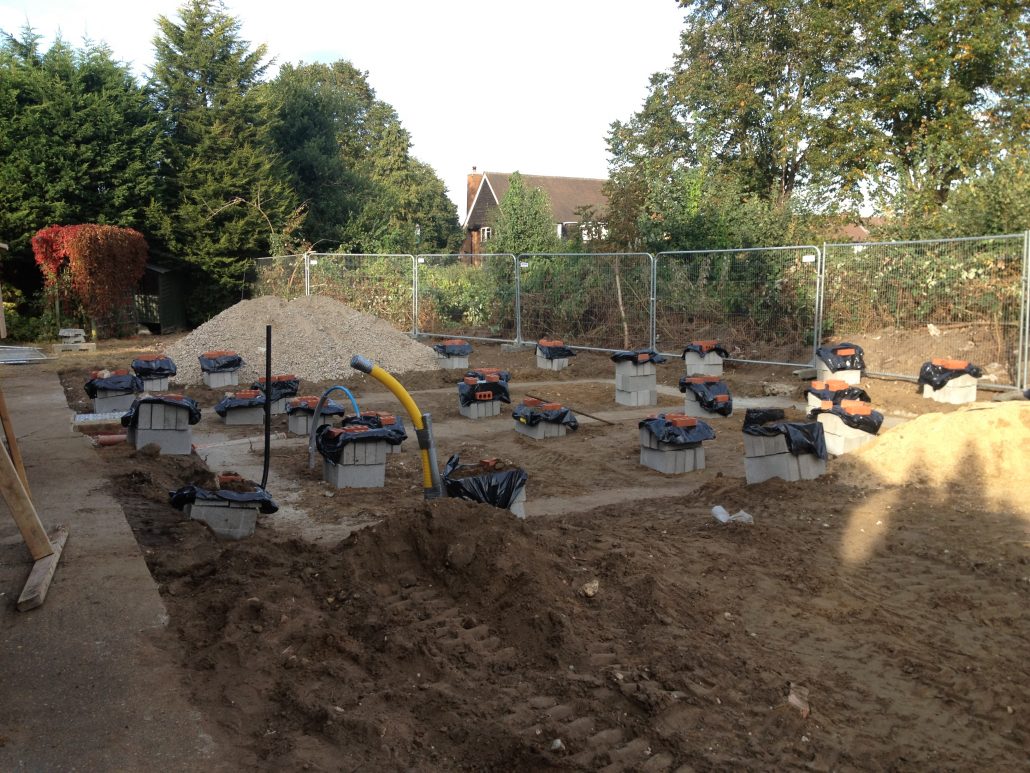
Garden rooms have become one of the most popular home improvements in recent years. Whether it is a home office, gym, studio or extra living space, a garden room can add thousands of pounds to your property value. But before the building arrives, you need a solid, level concrete base for your garden room — and getting this right is more important than many people realise. If you have been asking "do I need a concrete base for a garden room?", the answer is almost always yes. Here is everything you need to know about garden room foundations, including types, sizes, costs and common mistakes to avoid.
Why Garden Rooms Need a Proper Base
A garden room sits directly on its base, so every aspect of the structure above depends on what is underneath. Without proper garden room foundations, the building can settle unevenly, leading to cracked walls, doors and windows that stick, gaps that let in draughts and damp, and ultimately a structure that fails far sooner than it should. A concrete base for a garden room provides a flat, stable, moisture-resistant platform that distributes the weight of the building evenly and keeps it clear of ground-level water. It also gives the garden room supplier a consistent, reliable surface to fix into, which means a quicker, cleaner installation with fewer problems.
Types of Garden Room Foundations
There are three main types of base used for garden rooms, and the right choice depends on your site conditions, budget and the size of the building:
Concrete slab — the most common and most reliable option. A poured concrete slab of 100mm to 150mm thickness, laid on compacted hardcore, gives a solid, level surface that works for garden rooms of all sizes. This is what most garden room suppliers recommend, and it is what we install on the majority of our projects.
Screw piles — metal screw piles driven into the ground with a steel or timber frame on top. These are sometimes used on sloping sites or where the ground is very soft, as they transfer the load to firmer soil below. They can be quicker to install but tend to cost more than a straightforward concrete slab.
Pad foundations — individual concrete pads at each corner and at intervals along the walls, with a bearer frame spanning between them. Suitable for lighter structures on stable ground, but not ideal for larger or heavier garden rooms. Where pad foundations are used, accurate levelling is critical.
Typical Sizes and Depths
The base should be at least 100mm larger than the garden room on all sides. So for a typical 4m x 3m garden room, the base would need to be approximately 4.2m x 3.2m. Most garden room suppliers will specify the exact base dimensions they need, so always check before the base is poured. Getting the size wrong — even by a few centimetres — can cause problems during installation. For depth, a standard concrete base garden room slab is 100-150mm of concrete on top of 100-150mm of compacted MOT Type 1 sub-base. The ground beneath needs to be excavated to remove all topsoil and any soft material before the sub-base is laid and compacted. On sloping sites, additional depth or a stepped base may be required.
Ground Preparation: The Step Most People Skip
Proper ground preparation is arguably the most important part of the whole process. You cannot simply pour concrete on top of existing turf or topsoil — it will settle, crack and fail. The area needs to be excavated to a minimum of 200mm below finished slab level, all organic material removed, and the formation compacted before the sub-base goes down. The sub-base itself needs to be laid in layers and compacted with a vibrating plate or roller. Only then should the formwork be set, the membrane laid and the concrete poured. This excavation and preparation work is where professional groundwork contractors add the most value — we have the tools, the plant and the experience to prepare the ground properly, which is what makes the difference between a base that lasts and one that does not.
Building Regulations for Garden Rooms
Many garden rooms fall under permitted development and do not require planning permission, provided they meet certain size and height limits. However, even where planning permission is not required, the base still needs to be right. If the garden room will be used as a habitable space (for sleeping, for example), or if it exceeds 15 square metres with an internal heat source, Building Regulations may apply. In these cases, the garden room foundations will need to meet specific standards — including minimum concrete thickness, reinforcement, insulation and damp-proofing — and may require building control sign-off. It is always worth checking with your local authority before you start, as getting it wrong can mean having to take the building down.
Common Mistakes DIYers Make
We regularly get called in to fix garden room bases that homeowners have attempted themselves. The most common problems are: bases that are not level (even 5mm out can cause gaps under the frame); bases that are too thin and crack under the weight; inadequate sub-base preparation where the concrete settles into soft ground; poor concrete mixes that are too wet and lack strength; and no reinforcement, leading to cracking in clay soils that expand and contract with moisture changes. A base that looks flat to the eye can be several millimetres out of level — enough to cause real problems. Fixing a failed base typically costs more than having it done professionally in the first place.
Garden Room Base Cost Considerations
Garden room base cost depends on the size of the base, the ground conditions and access to your garden. As a rough guide, a professionally installed concrete base for a typical 4m x 3m garden room will cost between 1,500 and 2,500 pounds, including excavation, sub-base, formwork, reinforcement and concrete. Larger bases, difficult access (for example, narrow side passages that a mini digger cannot fit through) or poor ground conditions that need additional excavation will push the cost higher. While it might be tempting to save money with a DIY approach, the risk of getting it wrong — and the cost of putting it right — almost always makes hiring a professional the better investment.
Get a Quote for Your Garden Room Base
If you are planning a garden room and need a reliable concrete base, MJM Groundworks can help. We handle the full process — excavation, ground preparation, foundations and concrete slab pouring — across Surrey, Berkshire, Hertfordshire and London. Get in touch for a free, no-obligation quote or call us on 01784 697317.