Date: October 2024
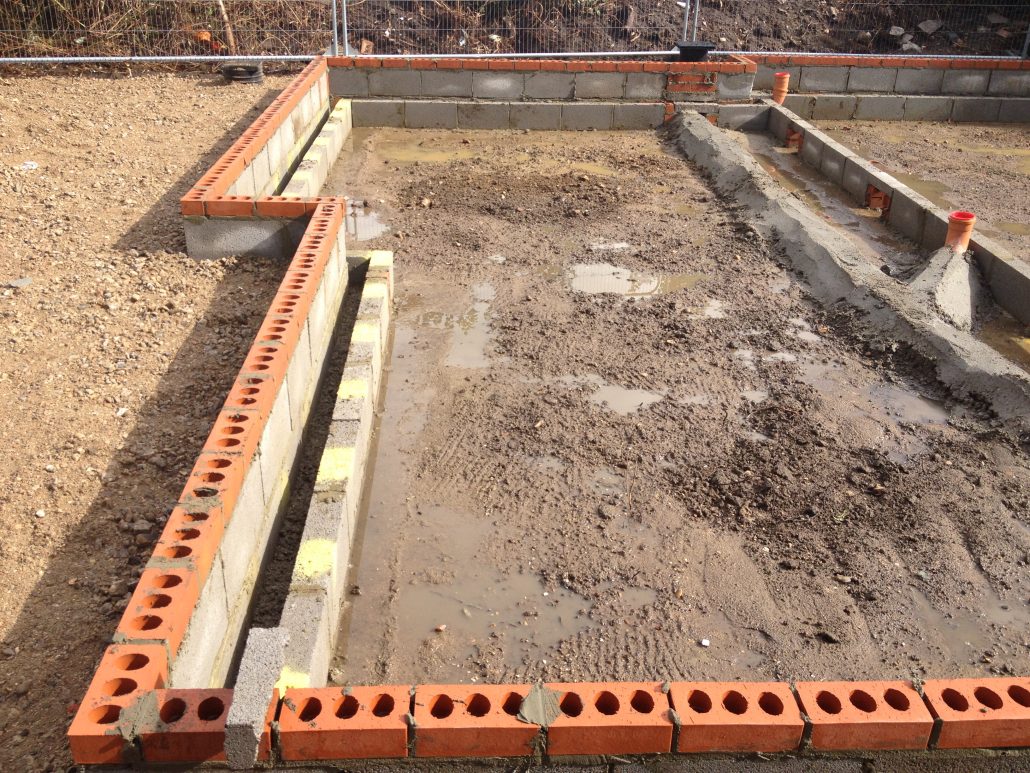
We were recently commissioned to carry out a large-scale agricultural groundworks package at Langley Farm in Harefield, Middlesex. The project involved preparing the site for a new steel-framed agricultural building, and required a full scope of groundworks in Harefield — from initial site clearance and excavation through to farm foundations, drainage installation and final reinstatement. As an experienced groundwork contractor in Middlesex, MJM was well placed to manage the complexities that come with working on active farmland.
Project Scope: Site Clearance and Excavation
The first stage of any agricultural groundworks project is getting the site ready. At Langley Farm, the designated building area was occupied by overgrown vegetation, remnants of old fencing and a section of disused hardstanding. Our team carried out a full site clearance, removing all obstacles and stripping the topsoil back to a suitable formation level. We stockpiled the topsoil on site for later reinstatement around the finished building. The excavation work was carried out using a 14-tonne tracked excavator and two six-tonne dump trucks, which allowed us to move material efficiently while keeping the working footprint as compact as possible — important on a busy farm where livestock and machinery need to continue operating alongside the construction work.
Challenges of Working on Farmland
Groundworks in Harefield and the surrounding rural areas of Middlesex present challenges that you simply do not encounter on a standard residential plot. Access was a key concern at Langley Farm — the site was reached via a single-track farm road shared with agricultural vehicles, so we had to carefully schedule deliveries to avoid bottlenecks. The ground conditions varied across the site too; trial holes revealed pockets of soft, waterlogged clay in places where field drainage had failed over the years. We also had to locate and protect existing water mains and electrical services that crossed the site, working closely with the utility companies to ensure nothing was damaged during the dig.
Farm Foundations for the Agricultural Building
Once the site was prepared, we moved on to excavating and pouring the foundations for the new building. The structural engineer specified reinforced concrete pad foundations to support the steel portal frame — a common foundation type for agricultural buildings because it distributes the load effectively on variable ground. We set out each pad position using a total station for accuracy, excavated to the required depth of 900mm, placed steel reinforcement cages and poured concrete to the specified levels. All farm foundations were inspected and signed off by building control before we moved to the next phase. In total, we poured twelve individual pad bases plus a ground beam along the front elevation where the roller shutter doors would be fitted.
Drainage Solutions for Agricultural Buildings
Effective drainage is critical on any agricultural site, and it was a major component of this project. We installed a comprehensive drainage system including 150mm perimeter surface water drains around the new building, connected to a new soakaway crate system sized to handle the run-off from the large roof area. Foul drainage from the wash-down area inside the building was connected to an existing sealed tank for collection. We also installed 80mm land drains in a herringbone pattern across the approach area to intercept water run-off from the surrounding fields and prevent waterlogging around the building. Without proper drainage, agricultural buildings can suffer from damp floors, foundation erosion and poor working conditions — particularly during the wetter months.
Project Timeline and Completion
The groundworks at Langley Farm were completed within three weeks, on schedule and within budget. We managed the project from start to finish, coordinating material deliveries, building control inspections and concrete pours to keep everything moving without delays. The site was handed over clean and ready for the steel erectors to begin the next phase. The client was pleased with the quality of work and the way our team conducted themselves on a busy working farm — minimal disruption, tidy site management and clear communication throughout.
Why Agricultural Builds Need a Specialist Groundwork Contractor
Agricultural groundworks are not the same as domestic groundworks. The scale is larger, the ground conditions are less predictable, and the access and logistics require careful forward planning. Choosing a groundwork contractor in Middlesex with genuine experience on rural sites means the job gets done properly, on time and without the costly mistakes that can occur when contractors underestimate the challenges of farmland. At MJM Groundworks, we have the plant, the people and the track record to deliver agricultural groundworks projects of all sizes.
If you have a similar agricultural or commercial groundworks project, MJM Groundworks can help. We handle everything from site clearance and foundations to drainage and excavation across Middlesex, Hertfordshire, Surrey, Berkshire and London. Get in touch for a free, no-obligation quote or call us on 01784 697317.